Virginia has once again become the center of national political attention after voters approved a controversial redistricting measure in April 2026. The decision allows lawmakers to redraw congressional district boundaries before the next census cycle, a rare and highly debated move. With control of the U.S. House of Representatives hanging in the balance, the vote is being viewed as a turning point not only for Virginia but also for the broader political landscape in the United States. The results reflect deep divisions over representation, fairness, and political strategy.
What Is Redistricting and Why It Matters
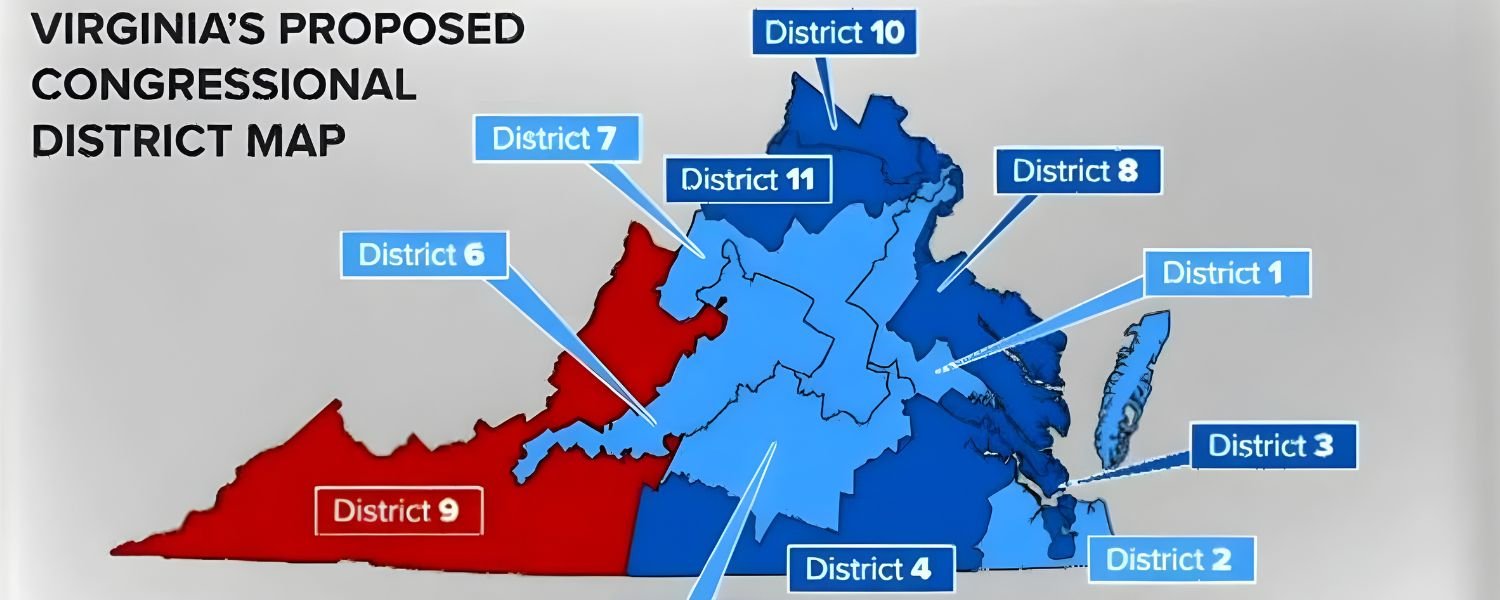
Redistricting refers to the process of redrawing congressional district boundaries, usually after a census. It determines how populations are represented in legislative bodies. In Virginia’s case, this process is now being revisited mid-decade, which is unusual. The change could significantly influence election outcomes by altering voter distribution across districts. Critics often associate redistricting with gerrymandering, where boundaries are manipulated for political advantage, making it a critical issue in maintaining democratic fairness and balance.
Key Outcome of the Virginia Vote
Virginia voters narrowly approved the redistricting measure, with just over 50 percent support. This slim margin highlights how divided public opinion was on the issue. The approval allows the state legislature to temporarily take control of drawing congressional maps, bypassing the independent commission established earlier. The decision is expected to have immediate political consequences, particularly as the state prepares for upcoming midterm elections that could shift national power dynamics.
Political Implications for Democrats
The new redistricting plan is widely seen as beneficial for Democrats. Analysts suggest that the revised maps could help the party gain up to four additional seats in Congress. If realized, this shift could transform Virginia’s congressional delegation from a closely contested split to a strong Democratic advantage. Such gains may play a decisive role in determining which party controls the U.S. House, especially in a highly competitive national political environment.
Republican Response and Concerns
Republicans have strongly opposed the measure, arguing that it undermines fair representation. Critics claim the new maps could dilute conservative voting power, particularly in rural areas. Some political leaders have even called for legal intervention, questioning the constitutionality of the referendum. The opposition views the move as a clear case of partisan gerrymandering, warning that it could set a dangerous precedent for other states to follow.
Role of Governor Abigail Spanberger
Governor Abigail Spanberger played a significant role in supporting the redistricting effort. Initially cautious, she later became a key advocate for the proposal. Her backing helped mobilize Democratic voters and strengthen the campaign for approval. The outcome of the vote is also seen as a political test of her leadership, with many analysts suggesting that her influence could shape future policy decisions and electoral strategies in the state.
National Impact and Political Ripple Effects

The Virginia vote is part of a larger nationwide battle over redistricting. Both Democrats and Republicans are actively seeking to redraw district maps in their favor. The decision in Virginia may encourage similar efforts in other states, intensifying the ongoing political competition. This trend highlights how redistricting has become a strategic tool in shaping national elections and determining legislative control.
Controversy Around Gerrymandering
One of the most debated aspects of the Virginia redistricting plan is the accusation of gerrymandering. Critics point to irregularly shaped districts, sometimes described as “lobster-shaped,” designed to combine urban and rural voters strategically. Supporters argue that such measures are necessary to counter similar tactics used by opposing parties in other states. This ongoing debate underscores the complexity of balancing fairness and political strategy in electoral systems.
Legal Challenges and Uncertainty
Despite voter approval, the redistricting plan faces legal scrutiny. The Virginia Supreme Court is currently reviewing challenges that could potentially impact the implementation of the new maps. While experts believe it is unlikely the results will be overturned, the legal proceedings add an element of uncertainty. The final outcome will determine how quickly and effectively the new districts can be put into place.
Impact on Upcoming Midterm Elections
The timing of the redistricting vote is crucial, as it comes just months before the 2026 midterm elections. The new district boundaries could significantly influence voter behavior and election outcomes. With control of Congress at stake, both parties are closely monitoring how these changes will play out. The vote has effectively turned Virginia into a key battleground state, with national implications for governance and policy direction.
Public Opinion and Voter Turnout
The referendum saw strong voter engagement, reflecting the importance of the issue. However, the narrow margin of victory also indicates widespread confusion and mixed opinions among voters. Campaigns on both sides invested heavily in advertising and outreach, highlighting the high stakes involved. The close result suggests that while many voters supported the measure, a significant portion remains concerned about its long-term impact.
Comparison with Other States
Virginia is not alone in revisiting redistricting policies. States like California and Texas have also engaged in similar efforts, often driven by partisan goals. These actions reflect a broader national trend where redistricting is increasingly used as a political strategy. The situation in Virginia may influence how other states approach their own electoral boundaries in the future.
Future of Redistricting in Virginia
The current plan allows temporary changes to district boundaries, with the expectation that the process will return to a more standardized system after the 2030 census. This temporary nature is intended to address immediate political concerns while maintaining long-term stability. However, the precedent set by this decision could shape future debates on electoral fairness and governance.
Broader Debate on Democracy and Representation
At its core, the Virginia redistricting vote raises fundamental questions about democracy and representation. Supporters argue that it empowers voters and ensures fair competition, while critics believe it distorts electoral outcomes. This debate reflects larger concerns about how political systems should balance fairness, representation, and strategic interests in a democratic structure.
Conclusion
The Virginia redistricting vote of 2026 marks a significant moment in American politics. By allowing lawmakers to redraw congressional districts ahead of schedule, voters have set the stage for a potentially dramatic shift in political power. While the move could benefit Democrats in the short term, it also raises important questions about fairness and the future of redistricting practices. As legal challenges unfold and elections approach, the full impact of this decision will become clearer in the months ahead.
Disclaimer
This article is for informational and news reporting purposes only. The content is based on publicly available sources and does not intend to promote any political party or ideology. Readers are encouraged to review official statements and verified data before forming opinions.
For more latest news, in-depth stories, and trending insights from around the world, keep visiting WikiWala and stay connected to what truly matters every day.
Sources

.webp)