Running a modern company means juggling endless tasks every single day. Teams spend hours sorting emails, copying records between databases, updating spreadsheets, and answering common customer queries. While standard software tools can perform scheduled tasks, they stop working the moment unexpected variables enter the picture.
This is where autonomous systems step forward. By adopting intelligent business automation, companies can hand off intricate operations to autonomous digital assistants. Exploring how AI agents for business function helps leadership teams unlock new levels of efficiency without burning out their human workforce.
1. What Are AI Agents for Business and How Do They Work?
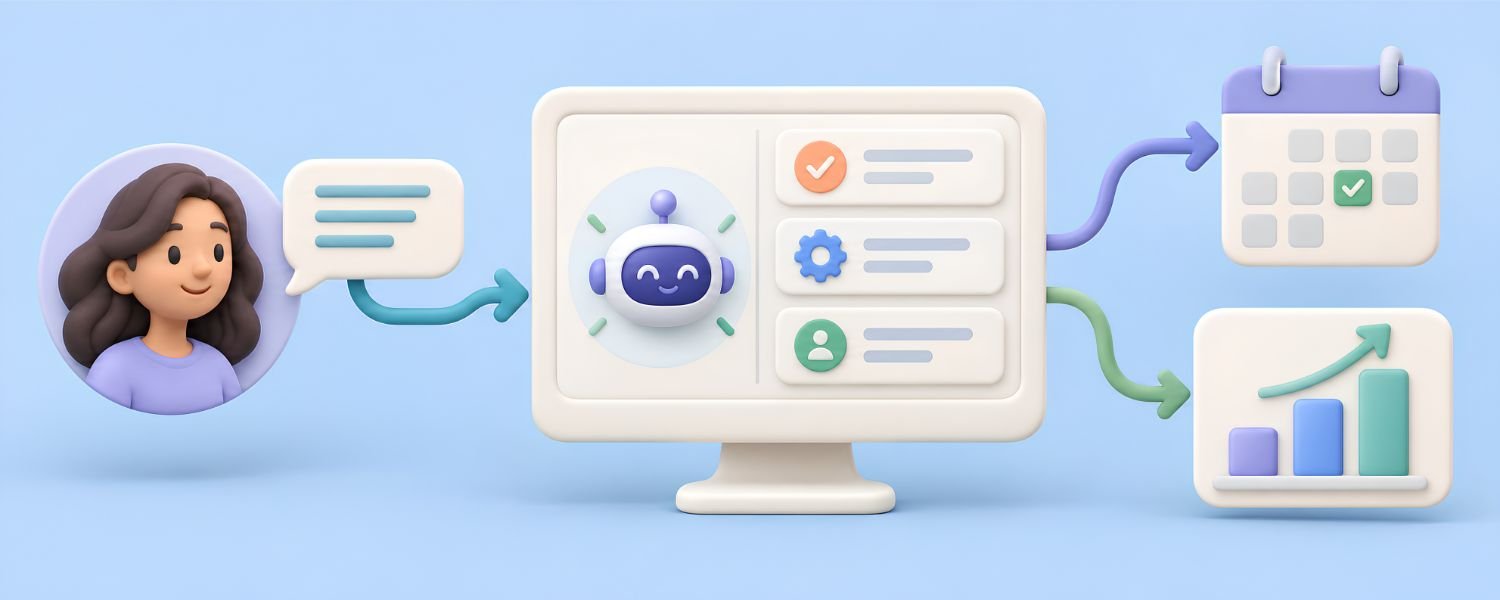
AI agents for business are advanced software programs designed to perceive their digital environment, reason through incoming information, make independent decisions, and take actions to achieve specific business goals. Unlike passive chatbots that wait for a question, business AI agents actively listen, plan multi-step workflows, and carry them out across several platforms.
To understand their mechanics, look at the core loop every agent follows:
- Perception: The agent gathers information from company databases, live customer chats, inbound emails, or connected application programming interfaces.
- Reasoning and Decision-Making: Using advanced machine learning models and large language models, the agent evaluates the situation, checks past company records, and determines the most logical course of action.
- Execution: The agent accesses external tools, such as software portals, messaging channels, or enterprise systems,to trigger actions, send replies, or move data.
- Learning and Adaptation: The agent reviews the results of its actions and refines its future choices to improve outcomes over time
Traditional automation tools, such as basic robotic process automation scripts, depend entirely on rigid “if-then” rules. If an invoice layout changes slightly or an email includes a typo, a traditional script fails immediately. In contrast, AI-powered automation brings adaptive context awareness. It reads unstructured paragraphs, figures out user intent,reconciles variations in information, and finishes jobs without constant human handholding.
2. Key Benefits of AI Agents for Businesses

Adopting specialized AI business solutions allows companies to remove routine bottlenecks, freeing employees to focus on strategic initiatives.
- Significant Boost in Business Productivity: Agents handle routine administrative duties around the clock. By delegating high-volume data collection and scheduling tasks to digital assistants, human employees reclaim valuable hours each week for strategic projects and creative problem-solving.
- Elimination of Repetitive Tasks: Monotonous chores, like validating invoices or logging call notes, often lead to human error and employee fatigue. Agents complete these routine duties quickly and consistently, drastically reducing manual processing mistakes.
- Faster and More Informed Decision-Making: Modern markets move quickly. Agents scan gigabytes of operational records in seconds, spot anomalies, and surface actionable recommendations so leadership teams can respond to shifts without delay.
- Round-the-Clock Operational Continuity: Unlike human teams that follow standard working shifts, digital agents maintain uninterrupted service 24 hours a day, 7 days a week. Global client requests receive instant replies regardless of local time zones.
- Scalable Business Operations: As customer demand grows, hiring and onboarding new staff can take months.Agents scale up instantly during traffic spikes, allowing organizations to manage larger workloads without seeing sudden spikes in payroll costs.
- Dependency on Implementation Quality: These benefits do not arrive automatically out of the box. Achieving genuine AI for business efficiency requires clean internal documentation, proper software setup, and ongoing human oversight to keep operations aligned with corporate standards.
3. Common Business Applications of AI Agents

Modern AI agents in business handle duties across almost every major operational department.
- Responsive Customer Support: AI customer service agents handle complex customer issues directly. Rather than serving static FAQ articles, they check order histories, verify shipping statuses, process refunds, and route sensitive escalations to live agents with complete incident summaries.
- Sales Pipeline Management: AI sales agents monitor incoming leads, research company backgrounds, score buying readiness, and send personalized follow-up emails. When a lead shows buying intent, the agent schedules a call directly on an account executive’s calendar.
- Targeted Marketing Campaigns: In marketing teams, agents analyze campaign metrics across multiple advertising channels, generate personalized ad variations, run split tests, and reallocate daily budgets to top-performing audience segments.
- In-Depth Data Analysis: Agents connect directly to data warehouses, extract financial reports, detect operational trends, and draft plain-language summaries for executive meetings without requiring dedicated data science tickets.
- Streamlined Administrative Operations: Internal operations benefit from automated employee onboarding,invoice approvals, vendor payments, and team calendar coordination.
- Cross-Platform Workflow Management: Advanced business process automation occurs when agents coordinate routine tasks across isolated apps. An agent can pull customer feedback from a survey, file a bug ticket in a development tracker, ping the engineering team on chat, and update the customer account record simultaneously.
4. Challenges and Considerations When Implementing AI Agents

While these systems offer incredible upside, leaders must address several operational hurdles to ensure smooth adoption.
- Data Privacy and Protection: Agents require access to company records to perform effectively. Organizations must implement strict access controls so proprietary trade secrets and customer records remain secure and compliant with relevant privacy laws.
- AI Security for Businesses: Connecting autonomous programs to live systems introduces potential vulnerabilities,including prompt injections and unauthorized data access. Companies must run regular security audits on all automated workflows.
- Integration Complexities: Many legacy enterprise software systems lack modern connectors. Bridging older on-premise software with cloud-based intelligence often requires custom engineering, which can extend launch timelines.
- Accuracy and Model Hallucinations: Large language models occasionally produce incorrect information with complete confidence. Businesses must maintain strict validation boundaries for high-stakes tasks like financial accounting or legal compliance.
- Upfront and Ongoing Costs: Developing custom solutions, acquiring software licenses, and training employees require measurable capital investment. Teams must balance these expenditures against projected time savings.
- The Need for Responsible AI Adoption: Autonomous tools work best when supervised by skilled workers.Companies should select low-risk workflows first, test agent outputs rigorously, and gradually expand permissions as the system proves its reliability.
5. How to Get Started With AI Agents for Business

A phased approach prevents common operational mistakes and helps teams demonstrate positive returns early on.
- Identify Repetitive Tasks: Review daily departmental routines to find clear bottlenecks. Look for repetitive, high-volume tasks that consume employee hours, such as sorting customer support tickets or compiling recurring weekly status reports.
- Define Measurable Business Goals: Decide exactly what success looks like before buying software. Establish concrete metrics, such as cutting support response times by half or processing supplier invoices 30 percent faster.
- Select the Right AI Tools for Businesses: Research available AI agent solutions to determine whether an out-of-the-box software platform or a customized custom build best fits your tech stack and budget.
- Build a Cohesive Business AI Strategy: Establish clear guidelines regarding which decisions the agent can make on its own and which actions require explicit human confirmation.
- Launch a Controlled Pilot Program: Deploy the chosen tool within a single team or a limited workflow. A focused launch allows your team to catch edge cases and refine instructions in a safe environment.
- Monitor Performance and Iterate: Review output accuracy, track system errors, and gather feedback from human employees who work alongside the tool. Use these findings to polish system instructions before expanding the rollout to other business units.
Frequently Asked Questions
1. What are AI agents for business?
They are autonomous software systems powered by artificial intelligence that can interpret information, make logical decisions, and execute multi-step tasks across company applications with minimal manual guidance.
2. How do AI agents help businesses improve productivity?
They take over monotonous administrative tasks, process data at machine speed, operate continuously without taking breaks, and free employees to focus on high-impact strategic responsibilities.
3. What are the most common uses of AI agents in business?
Typical uses include automated customer service, sales prospect qualification, dynamic marketing campaign management,business data reporting, and multi-app workflow coordination.
4. What is the difference between AI agents and traditional automation?
Traditional automation follows rigid, predefined scripts that break when encounter unexpected inputs. AI agents understand unstructured text, adapt to changing scenarios, and resolve complex issues using dynamic reasoning.
5. What should businesses consider before implementing AI agents?
Key factors include data security, software integration feasibility, implementation costs, output accuracy, and building safe human-in-the-loop validation checkpoints.
Conclusion
AI Agents for Business can help reduce repetitive tasks and improve everyday workflows. Start with a clear goal, protect your data, and keep human oversight in place. Explore our guides for practical insights to help you make informed decisions about using AI in your business.

.webp)