Love has never been easy. But today, it has become faster, more public, and sometimes, far more dangerous.A generation that grew up with smartphones, unlimited internet, and instant gratification is now redefining what love looks like. Gen Z doesn’t just date differently but they think differently about relationships itself. One swipe can start a romance. One screenshot can end it.
From situationships and ghosting to dating apps and viral relationship advice, modern dating has become a mix of convenience, confusion, and emotional uncertainty. While technology has created more opportunities to connect, it has also changed expectations, commitment, and emotional maturity.
Incidents
Recent incidents like the Mohali murder case, the ₹370 Biryani controversy, and the Lohagarh case have sparked conversations about consent, entitlement, obsession, rejection, and the darker side of modern relationships. These incidents are not representative of an entire generation, but they have prompted wider public discussion about relationship attitudes, online influence, and emotional regulation.
The question is”What mindset is shaping modern relationships today?”
Evolution of Dating
Millennials typically experienced a more predictable dating experience.
You got to know each other through family, coworkers, friends, or college.Before you met, you spoke for weeks. Commitment came before public display.
The method frequently appears entirely different for Generation Z.
Start by swiping.
Match right away.
Spend hours texting.
Get together fast.
Proceed even more quickly.
Nowadays, dating is determined by algorithms. Meeting new people has never been simpler thanks to apps, but they have also led to what psychologists refer to as the “paradox of choice.” Commitment frequently gets more difficult when hundreds of profiles become available in a matter of minutes because there is always another choice that appears to be just a swipe away.
Welcome to the Era of “Situationships”
There is even a terminology specific to modern partnerships. The following are a few of the most popular Gen Z dating terms:
Relationship Ghosting, Breadcrumbing, Love Bombing, Orbiting, Benching, Zombieing, Soft Launch, Hard Launch, Delulu, Red Flags, Green Flags
These terms reflect changing dating norms, but they can also normalize uncertainty, mixed signals, and short-lived connections.
Instead of asking, “Are we together?” many young couples ask, “What are we?”
Dating Apps Changed More Than Dating

One thing was promised by dating apps: More options. They also brought something else.
1.Quicker attachment
2.Quicker rejection
3.Never-ending comparison
4.Seeking validation all the time
Every match releases anticipation. Each unread message creates anxiety. Each and Every breakup becomes content. Relationships today often exist not only between two people—but also in front of thousands of followers.
Influence of Foreign Culture
One of the biggest debates today is whether Indian dating culture is becoming increasingly influenced by Western social media. Global content has introduced ideas like: Casual dating Hookup culture Individualism “Cut people off” mentality Hyper-independence Therapy language Personal boundaries Many of these ideas are valuable when understood properly. However, problems arise when concepts are adopted without understanding the cultural or emotional context behind them. Healthy boundaries are not the same as emotional avoidance. Confidence is not the same as arrogance. Freedom is not the same as lack of accountability. The internet often compresses complex relationship ideas into catchy slogans that can be misunderstood or oversimplified.
When Rejection Becomes Obsession :The Mohali Murder Case

One disturbing pattern visible in several recent criminal cases is the inability to accept rejection.
The Mohali murder case, in which investigators say a woman was allegedly killed by a colleague following repeated rejection, according to initial reports shocked the country because it reflected how unresolved emotions and obsession can escalate into violence. Authorities continue to investigate the case.
Such incidents are extreme and uncommon, but they highlight the importance of emotional regulation, respect for boundaries, and seeking help when emotions become overwhelming. Violence is never an acceptable response to rejection.
The ₹370 Biryani Controversy: Entitlement Disguised as Humor
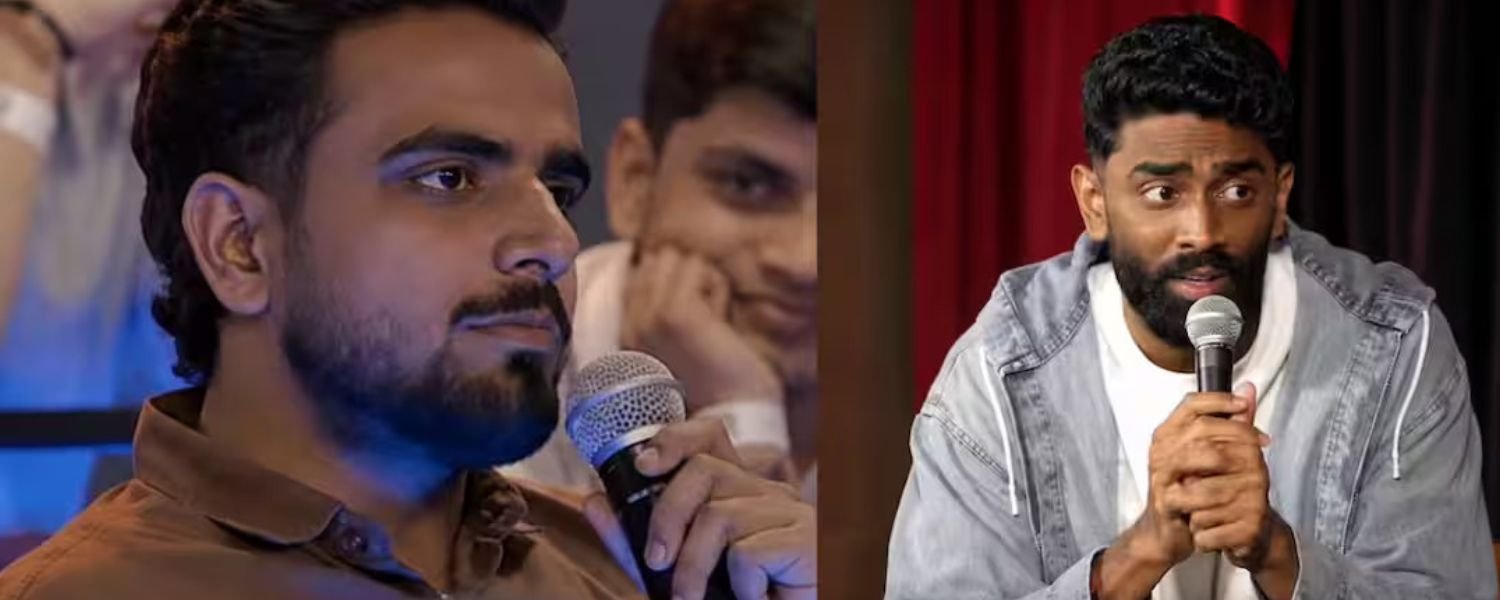
Another incident that triggered widespread discussion involved the now-famous ₹370 Biryani controversy.
A viral comedy show interaction featured remarks suggesting that paying for a meal created an expectation of physical intimacy. The comments drew criticism for appearing to reflect an attitude of entitlement rather than mutual consent, and the incident led to broader debates about dating norms, accountability, and misogyny.
The amount—₹370—was never the real issue. The mindset was. Healthy relationships are built on mutual respect, not transactions. Buying dinner does not create an obligation. Consent cannot be purchased.
Lohagarh Murder Case
The term “Lohagarh Case” circulating on social media refers to a viral alleged murder incident involving a young couple at Lohagad Fort (near Pune, Maharashtra).
According to initial police reports and news coverage:
- A young man named Ketan Agarwal had gone trekking at Lohagad Fort with his fiancée.
- During the outing, he was pushed into a deep valley.
- Investigators later claimed that his fiancée and her alleged lover may have conspired in his death.
- The case turned into a major public discussion because of its shocking “planned wedding → betrayal → murder” narrative.
Police reportedly arrested the accused and began questioning inconsistencies in their statements and digital evidence. It was often framed online as a symbol of “toxic modern relationships,” even though investigations are still based on legal proceedings, not social media narratives.
These cases highlight the darkside of genz mindset.
Why Are Relationships Becoming More Complicated?
Several forces are shaping Gen Z relationships simultaneously:
1. Constant Comparison
People compare partners with influencers.
2. Fear of Missing Out
Someone “better” always seems one swipe away.
3. Emotional Burnout
Multiple talking stages.
Less emotional energy.
Is GenZ Losing Faith In Love
Not always.
According to surveys, Gen Z continues to place a high emphasis on love and deep connections. But many also place a high priority on compatibility, mental health, and personal development, and they are pursuing these objectives in a digital world that can magnify comparison, false information, and irrational expectations.
The need for connection hasn’t been eliminated by technology. It has simply changed the way people search for it.
Real Problem
It’s simple to point the finger at one generation. However, each generation is a reflection of the society in which it is raised.
Gen Z inherited:
1.Social media since childhood.
2.Algorithms that are intended to increase participation.
3.Dating applications that turn attraction into a game.
4.Strangers’ relationship advice went viral.
5.Continuous digital comparison.
It’s not that Gen Z is “broken.” The problem is that platform is increasingly influencing relationships.
Conclusion
Love has always evolved with society. Today’s relationships are influenced by technology, globalization, and changing cultural norms in ways previous generations never experienced.
Perhaps the most important relationship skill today isn’t finding the right person. It’s developing the emotional maturity to communicate honestly, respect boundaries, handle rejection without hostility, and remember that behind every profile, message, or viral story is a real human being. Love in the digital era is not disappearing — it is evolving. But with faster connections, comes faster confusion.
The real challenge is not finding love, but learning how to navigate emotions in a world where everything is instant, visible, and constantly judged.
“In a world full of noise, emotional clarity is the new relationship skill.”

.webp)